Is the Listing Price the Best Way to Judge a Home's Value?
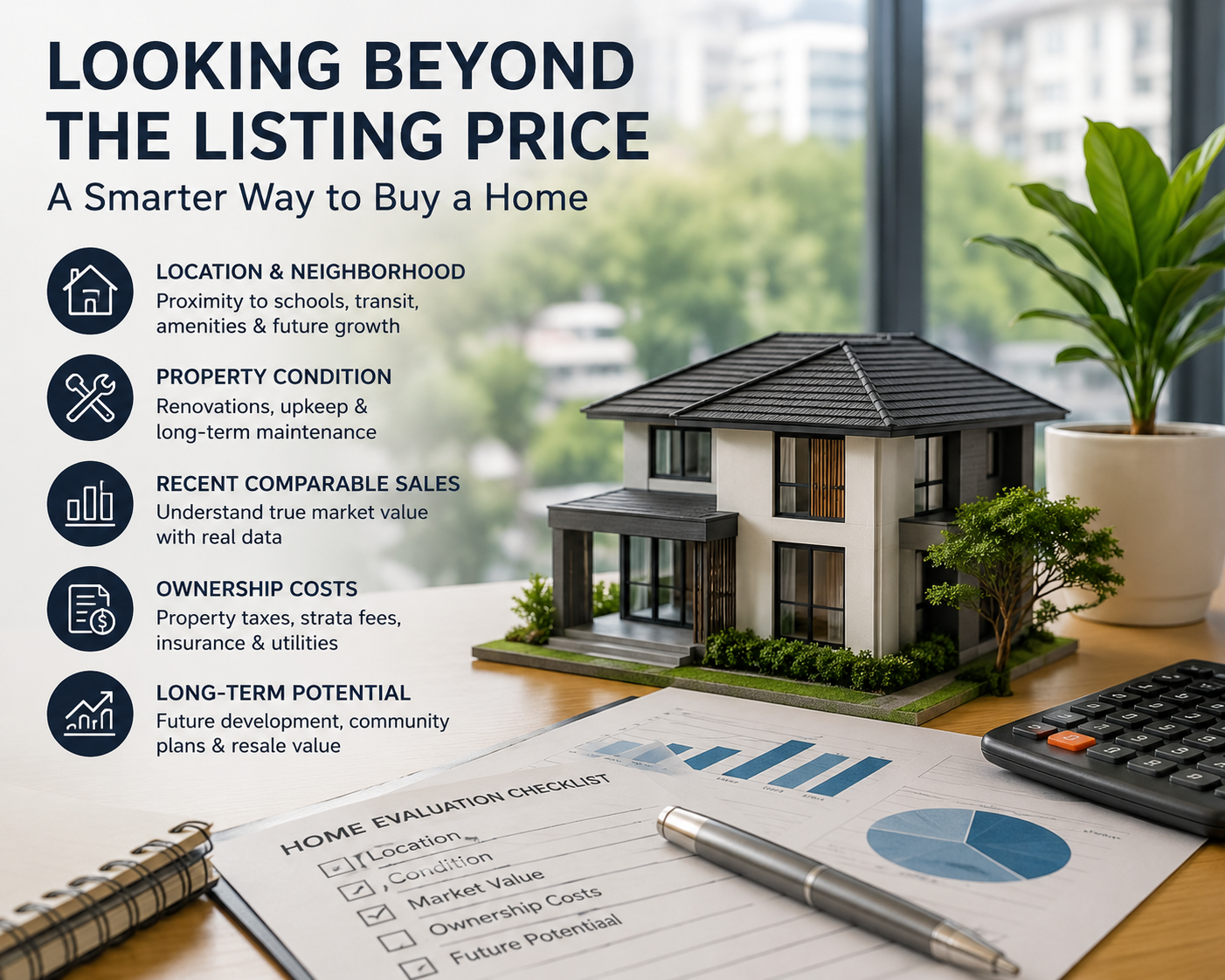
No. While the listing price is an important starting point, it doesn't tell the complete story. Buyers should also evaluate the property's condition, recent comparable sales, neighborhood, ownership costs, and long-term potential before making a purchase decision.
Buying a home is one of the largest financial decisions you'll make. Focusing solely on the asking price can cause buyers to overlook important details that affect both lifestyle and future investment value.
Why the Listing Price Is Only the Beginning
A listing price reflects what a seller hopes to receive, but it isn't always an indicator of market value. In competitive markets like Greater Vancouver and the Fraser Valley, pricing strategies vary depending on market conditions, inventory levels, and seller objectives.
Some homes are intentionally priced below market value to generate multiple offers, while others may be listed above market value to leave room for negotiation. Understanding the local market helps buyers recognize the difference.
Compare Recent Sales Instead of Asking Prices
One of the most effective ways to determine value is by reviewing comparable sales.
Comparable properties typically share similar characteristics, including:
Location
Property type
Square footage
Age
Lot size
Overall condition
Recent sales provide a clearer picture of what buyers are actually willing to pay rather than what sellers are asking.
Evaluate the Property's Overall Condition
A beautifully staged home can make an excellent first impression, but buyers should look beyond cosmetic updates.
Consider factors such as:
Roof condition
Plumbing and electrical systems
Windows and insulation
Foundation
Heating and cooling systems
Renovation quality
A home requiring significant repairs may cost far more than expected after closing.
Don't Overlook Ownership Costs
The purchase price is only part of the overall cost of homeownership.
Additional expenses may include:
Property taxes
Home insurance
Utilities
Strata fees (for condos and townhomes)
Maintenance and repairs
Landscaping and exterior upkeep
Understanding these ongoing costs helps buyers create a realistic long-term budget.
Location Can Add Long-Term Value
Real estate has always been influenced by location.
When comparing homes, consider:
School catchments
Transit access
Parks and recreation
Shopping and services
Walkability
Planned infrastructure improvements
Community growth
The right neighborhood can contribute to both everyday convenience and future resale potential.
Think Beyond Today's Needs
A home should support your future as well as your current lifestyle.
Ask yourself:
Will this home accommodate a growing family?
Is there enough space for remote work?
Will commuting remain convenient?
Could this property have strong resale appeal in the future?
Thinking long term often leads to better purchasing decisions.
Buying with a Strategic Perspective
The best home isn't always the one with the lowest asking price. It's the property that delivers the greatest overall value based on your financial goals, lifestyle, and future plans.
Taking the time to evaluate the complete picture can help buyers avoid costly mistakes and make confident decisions in today's market.
Local Insight for Greater Vancouver and the Fraser Valley
Every community throughout Greater Vancouver and the Fraser Valley has unique market dynamics. Property values, neighborhood amenities, transportation options, and future development plans can all influence a home's overall value.
Working with local market knowledge allows buyers to better understand what makes one property a stronger long-term investment than another.
Final Thoughts
The listing price is only the beginning of the home-buying conversation. Looking at comparable sales, property condition, ownership costs, location, and long-term potential provides a much clearer understanding of a home's true value.
Whether you're purchasing your first home, upgrading, or investing, making an informed decision starts with evaluating the full picture—not just the price tag.