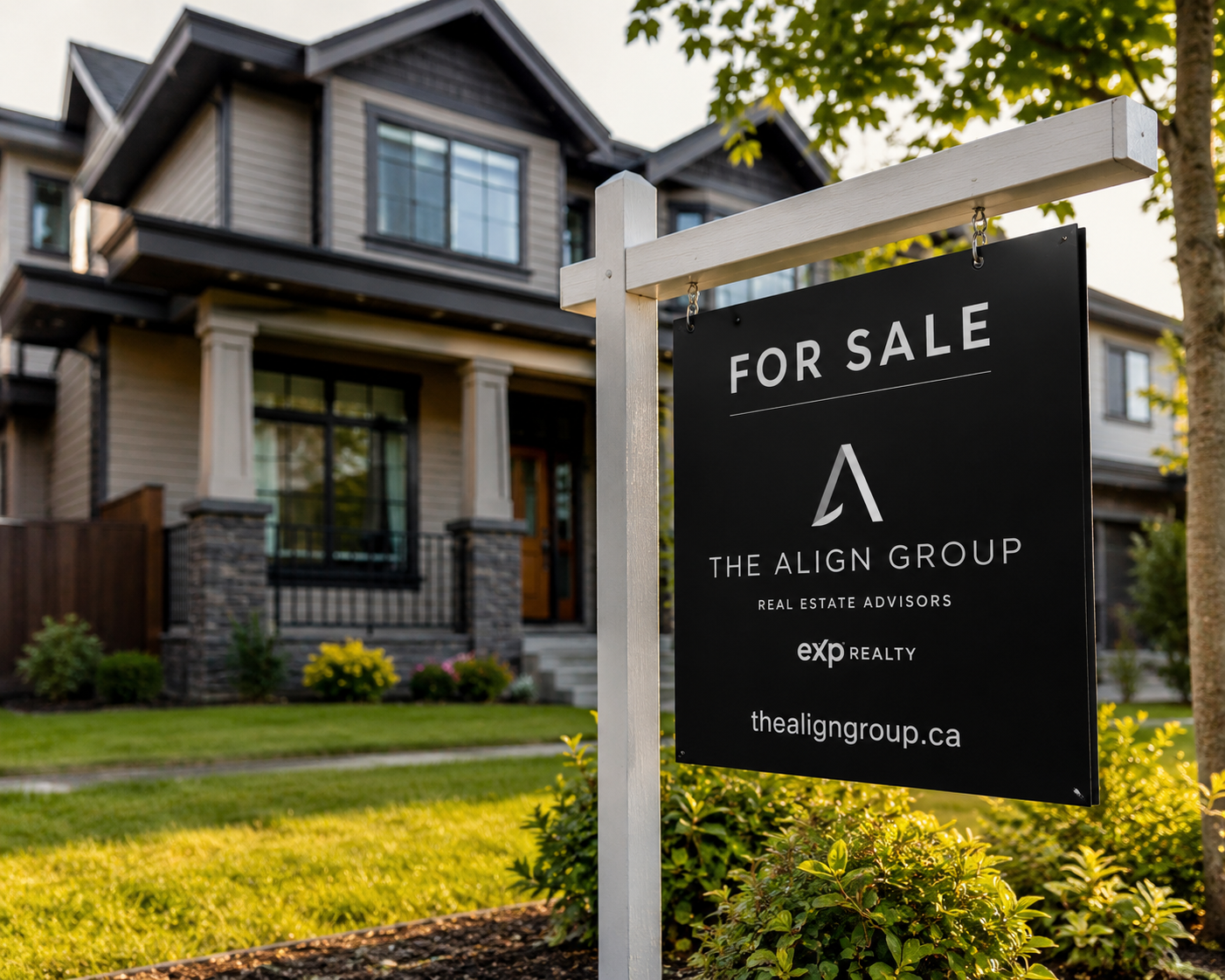
Selling a home in Greater Vancouver requires more than choosing a listing date and setting an asking price. Homeowners should understand their property's local market position, current competition, pricing strategy, preparation needs, and how the sale connects with their next move.
A well-planned sale can help reduce uncertainty and create a clearer path from the decision to sell through to completion. Because market conditions and buyer activity can vary by neighbourhood and property type, the right strategy should be based on the specific home and the homeowner's objectives.
Quick Summary
Review recent comparable sales and current competing listings.
Consider your property's condition, presentation, and preparation needs.
Develop a pricing strategy based on local market context.
Understand your next move before finalizing your selling timeline.
Plan for the financial, legal, and logistical steps involved in the transaction.
Why Is a Pre-Listing Strategy Important?
Before a property is listed, homeowners have an opportunity to evaluate the sale from a broader perspective.
The key question is not simply, "What can my home sell for?" It is also important to consider:
Who is the likely buyer?
What other properties will buyers compare it against?
How should the home be presented?
What timing considerations may affect the overall plan?
What happens after the sale?
A strategic approach can help homeowners make decisions before the pressure of an active listing or offer negotiation begins.
How Should Homeowners Evaluate Their Local Market Position?
Look Beyond a Single Comparable Sale
A recent sale can provide useful context, but one transaction does not define an entire property's market value.
A proper review should consider multiple relevant factors, including:
Property type
Location
Size and layout
Age and condition
Features and improvements
Recent comparable sales
Properties currently available to buyers
For example, a detached home in Surrey may face different buyer expectations than a condominium in Burnaby or a townhouse in Langley. Even within the same city, neighbourhood characteristics and housing supply can influence how a property should be positioned.
Understand the Competition
Current listings matter because buyers often compare multiple properties at the same time.
Homeowners should understand what alternatives are available in their property's price range and how their home compares in terms of condition, presentation, location, and features.
The objective is not necessarily to match competing properties. It is to understand how buyers may evaluate the available options.
How Should a Home Be Prepared for Sale?
Not every improvement will have the same impact.
Before spending money on renovations or upgrades, homeowners should consider whether the work is necessary for the property's market position and likely buyer.
Preparation may include:
Decluttering and organizing spaces
Completing visible maintenance
Improving lighting and presentation
Addressing deferred repairs where appropriate
Professional photography
Strategic staging or furniture placement
In some cases, simple preparation can make a property easier for buyers to understand and visualize. In other cases, significant renovation may not be necessary before listing.
The right approach depends on the home, its condition, the target buyer, and the surrounding market.
What Should Homeowners Know About Pricing Strategy?
Pricing is one of the most important decisions in the selling process.
An asking price should be supported by relevant property and market information rather than based solely on a homeowner's expectations or a general headline about the market.
A pricing strategy should consider:
Recent Sales
Comparable transactions can provide insight into what buyers have recently paid for similar properties.
Current Competition
Active listings show the alternatives buyers can consider right now.
Property-Specific Features
Views, lot characteristics, renovations, floor plans, parking, strata considerations, and location can all influence buyer perception.
Market Timing
Buyer activity and available inventory can change over time, which is why a strategy should be reviewed in the context of current conditions rather than relying entirely on older information.
Why Should Your Next Move Be Part of the Selling Strategy?
Selling a property is often connected to another major decision.
Homeowners may be:
Purchasing another home
Relocating within Greater Vancouver or the Fraser Valley
Moving to a different province or country
Downsizing
Upsizing for a growing household
Selling an investment property
Managing an estate or probate sale
These situations can affect timing, financing, possession requirements, and negotiation strategy.
For example, a homeowner planning to buy another property may need to consider the relationship between selling and purchasing timelines. Someone relocating may place greater importance on a specific completion date. A senior homeowner downsizing may prioritize a smooth transition rather than simply focusing on the highest possible sale price.
The best strategy should reflect the entire situation.
Greater Vancouver and Fraser Valley Market Context
Real estate decisions across Greater Vancouver and the Fraser Valley are highly local.
A seller in Vancouver may be dealing with a different buyer profile and housing type than a seller in Coquitlam, Richmond, Surrey, Langley, Abbotsford, or White Rock.
Local considerations can include:
Housing type and neighbourhood character
Transportation access
Schools and community amenities
Development activity
Strata or property-specific considerations
Buyer demand for particular property types
This is why broad market commentary should be supplemented by property-specific and neighbourhood-specific analysis.
What Questions Should You Ask Before Listing Your Home?
Before beginning the selling process, consider asking:
What are comparable homes currently selling for?
What properties will buyers compare with mine?
Does my home need repairs or preparation before listing?
Who is the most likely buyer?
What is my ideal timeline?
What happens after my home sells?
Are there financing or purchase considerations connected to my next move?
What terms are important to me beyond the sale price?
How should my property be marketed to reach the right audience?
What information should I understand before accepting an offer?
Clear answers to these questions can help create a more organized and strategic selling process.
The Strategic Takeaway for Homeowners
Selling a home in Greater Vancouver or the Fraser Valley should begin with preparation and informed decision-making.
Understanding your property's market position, competition, presentation requirements, pricing considerations, and next move can help you approach the process with greater clarity. The goal is not to predict every market change. It is to develop a strategy based on reliable local information and your specific real estate objectives.
If you are considering selling, relocating, downsizing, or planning your next purchase, a property-specific discussion can help clarify the available options and the steps involved.
Frequently Asked Question
What should I do before selling my home in Greater Vancouver?
Before selling your home, review recent comparable sales, current competing listings, your property's condition, potential preparation needs, pricing considerations, and your plans after the sale. Because real estate conditions can vary by neighbourhood and property type, a local and property-specific strategy can provide a more useful foundation than broad market assumptions alone.